Commercial Invoice: A Practical Guide for International Trade
Whether you're shipping goods across the globe or managing a small business, a commercial invoice is more than just a form—it's a critical tool that can make or break your export process. If you're involved in international trade, understanding what a commercial invoice is and how to use it effectively can save you time, money, and headaches.
A commercial invoice is a document that lists the details of a transaction between a buyer and a seller. It serves as proof of sale and includes information such as the product description, quantity, price, and terms of payment. More importantly, it’s required by customs authorities in most countries to determine duties and taxes on imported goods.
When and Why You Need a Commercial Invoice
You’ll need a commercial invoice any time you send goods internationally. Whether you’re an entrepreneur selling handmade crafts online or a logistics provider handling shipments for clients, this document ensures compliance with import regulations and helps avoid delays at borders.
Imagine this: you’ve spent months building a product, and now it’s time to ship it overseas. Without a properly filled-out commercial invoice, your package could be held up at customs, leading to additional costs and customer dissatisfaction. That’s why having a reliable template is essential.
Who Uses a Commercial Invoice?
The commercial invoice isn’t just for big corporations. It’s used by a wide range of professionals and businesses, including:
- Exporters: They rely on commercial invoices to document sales and ensure smooth delivery of goods abroad.
- Freight forwarders: These professionals handle the logistics of shipping and need accurate invoices to coordinate with customs and carriers.
- Logistics providers: They use invoices to track shipments and manage documentation efficiently.
- Small business owners: Whether you sell online or through local markets, a commercial invoice helps maintain transparency and professionalism.
Even if you’re not exporting, a commercial invoice can be useful for internal record-keeping, especially if you deal with international clients or suppliers.
Real-World Use Cases for a Commercial Invoice
Let’s look at a few scenarios where a commercial invoice plays a key role:
Scenario 1: Selling Online to International Customers
If you run an e-commerce store and sell products to customers in other countries, you’ll need a commercial invoice to process shipments. For example, if you sell custom jewelry from your home studio and ship to Germany, the buyer’s customs office will require the invoice to calculate import duties. Without it, your shipment might be delayed or even returned.
Scenario 2: Shipping Goods for a Client
As a freight forwarder, you might be responsible for moving goods from one country to another. Your client expects timely delivery, and part of your job is ensuring all paperwork is in order. A well-prepared commercial invoice helps you meet these expectations and avoid unnecessary costs.
Scenario 3: Managing Inventory and Sales
Even if you don’t ship internationally, a commercial invoice can help you track sales and manage inventory. For instance, a small retail store owner might use an invoice to record transactions with suppliers or to issue receipts for customers who purchase items in bulk.
What to Consider Before Using a Commercial Invoice
Before you start using a commercial invoice, there are a few things to keep in mind:
- Accuracy is key: Any mistakes in the invoice—like incorrect product descriptions or pricing—can lead to delays or penalties.
- Understand the requirements: Different countries have different rules about what needs to be included in a commercial invoice. Make sure you’re aware of these before sending your shipment.
- Use a reliable template: A well-designed commercial invoice template makes the process easier. Look for one that includes all necessary fields and is easy to customize.
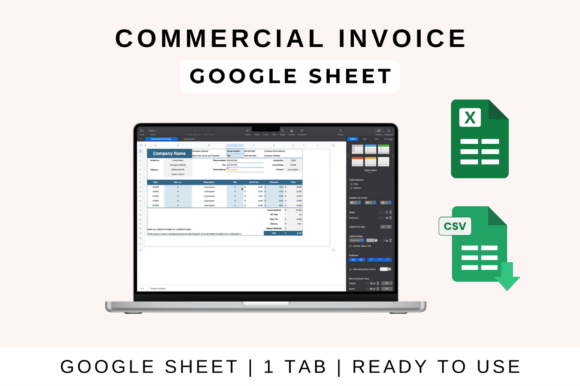
Choosing the right template can make a big difference. A good commercial invoice should include sections for buyer and seller details, product information, shipping terms, and payment instructions. It should also allow for easy editing and formatting to suit your specific needs.
How to Use a Commercial Invoice Template
Using a commercial invoice template in Google Sheets or Excel is straightforward. Here’s a quick guide:
Using the Template in Google Sheets
- Upload the template to Google Drive and open it in Google Sheets.
- Fill in the relevant details, such as the buyer’s and seller’s information, product descriptions, and pricing.
- Let the sheet auto-calculate totals, profit, and loss.
- Customize categories, formulas, or visuals to fit your workflow.
- Share the file with your team for real-time collaboration.
Using the Template in Excel
- Download the Excel version and open it on your desktop.
- If prompted, enable editing to access all features.
- Enter your data into the appropriate fields.
- Adjust formulas or formatting as needed.
- Save and share the file with colleagues or clients.
These tools make it easy to manage multiple invoices and keep your records organized. Plus, they’re compatible with popular spreadsheet programs, so you can work from anywhere.
Why a Good Commercial Invoice Matters
A well-prepared commercial invoice doesn’t just meet legal requirements—it also builds trust with your customers and partners. When you provide clear, accurate documentation, you show that you’re professional and reliable. This can lead to repeat business and positive reviews, which are invaluable in today’s competitive market.
Whether you’re a small business owner, a digital creator, or a logistics expert, a commercial invoice is a valuable asset. By using the right template and following best practices, you can streamline your operations and focus on what really matters—growing your business.